Gemological grading for the lab-grown era Mon–Fri 9:00–5:00 ET New York Metropolitan Area Client Intake

Measured grading for the lab-grown era.

IGML certifies laboratory-grown diamonds, colored gemstones, and finished jewelry for the fine jewelry trade. Every stone is tested on calibrated instruments, graded by credentialed gemologists, and issued a report anyone can verify online.

A diamond held in steel tweezers
From the laboratory

Introducing the Rare Cuts Program.

Portuguese, elongated hexagonal, Old Mine, and other unusual makes, graded rigorously from their own measured geometry. Because every stone is scanned to the micron, a cut with no standard grading chart can still be assessed from what it actually measures.

Five loose diamonds in unusual cuts, including an elongated hexagon, a cushion and a kite
The registry

Every report, verifiable by anyone.

Each IGML report number resolves in our public registry the day it is issued. Your customer, their appraiser and their insurer can all check the same record from any phone, free of charge.

A desktop computer with a phone standing upright in front of it, both screens showing the IGML homepage

What the laboratory does

Certification services for retailers, manufacturers, and the customers they serve.

Why IGML

The standards that separate a laboratory from a printing service.

  • Every stone is tested first

    No grade is written until instruments confirm what the stone is. Identity testing is included at every tier, for every client, without exception.

  • Graded blind, then graded again

    Color, clarity, and cut are called against master stones without the grading team being told whose goods they are, then independently confirmed by a second gemologist before the report is authorized. No one here is paid on client volume, and no fee depends on the grade that is written.

  • Measured, not estimated

    Non-contact scanning captures every facet to the micron. Proportions on an IGML report are the stone’s actual geometry, and light performance is computed from it.

  • No interest in what we grade

    IGML issues no report on goods any owner or employee holds a financial interest in, holds no inventory of its own, and never shares what you submit with anyone. Grading fees are the laboratory’s only revenue.

  • Verifiable by anyone

    Every report number resolves in the public registry the day it is issued. Your customer, their appraiser, and their insurer can all check the same record.

Rare Cuts Program

Rare cuts are a specialty here, not an exception.

Most laboratories grade the round brilliant well and everything else reluctantly. IGML maintains a dedicated program for rare and revival cuts. Because every stone is scanned to the micron, a cut with no standard grading chart can still be assessed rigorously, from its own measured geometry and computed light performance.

The Portuguese Cut
Tier upon tier of triangular facets with no table at all, meeting at a point. Face-up facet arrangement, drawn from a measured stone.
The Elongated Hexagonal Cut
A stretched six-sided step cut with long parallel facets running the length of the stone. Face-up facet arrangement, drawn from a measured stone.
The Old Mine Cut
The antique cushion brilliant: cut-corner table, broad kite mains, and an open culet visible through the face. Face-up facet arrangement, drawn from a measured stone.

Submitting an unusual make? Speak with the laboratory about proportion analysis and light performance mapping for non-standard cuts.

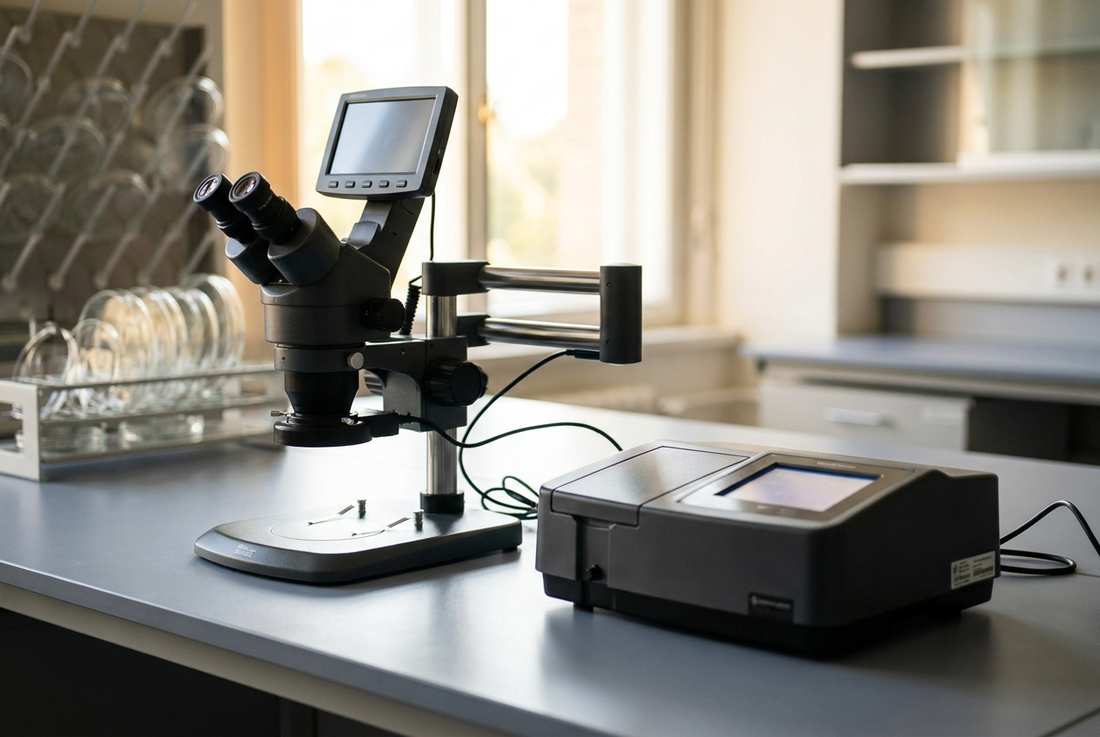
A gemological grading bench with microscopes and daylight-equivalent lamps
Grading is performed under daylight-equivalent lamps, on calibrated instruments, against master stone sets.

Verify an IGML report

Enter the report number printed on any IGML document to confirm its details instantly. Free of charge, for anyone, at any time.

A grader holds a diamond in tweezers beside a stereo microscope
Every stone is examined by two graders before its report is authorized.

Machines measure. Gemologists judge.

The scan and the spectra come first, fixing the facts: identity, geometry, weight, and type. Then graders work color against master stones under standardized light, map clarity at the microscope, and judge cut from measured proportions.

Where two graders disagree, the stone is re-examined under supervision, and the re-examination decides. The measured record and the graded record are stored together against the report number.

Inside the laboratory: instruments & methods →
IGML International Gemological & Minerals Laboratory

An IGML report tells your customer exactly what they are buying, and gives you the documentation to stand behind it.

IGML was founded by diamond trade professionals with a single mandate: grading that holds up. Every grade is written to be checked, and to agree with what any qualified gemologist finds.

Speak with the laboratory

Questions about our reports, methods, or whether your goods are a fit. We respond within one business day.

Contact the Laboratory